google

Showing posts with label google. Show all posts

NYT Looks At Dr. Google and Dr. Microsoft

Today's NYT article, Dr. Google and Dr. Microsoft, takes a look at how Google and Microsoft are focusing efforts on the health care industry and how to improve the traditional health care system by utilizing technology to allow patients greater access and control over their personal health information. Both companies are still in the planning phase and trying to determine what will work and what patients might want, use and need.

The entry of these two tech giants along with a slew of other health-technology companies are likely to cause disruption in the health marketplace traditionally controlled by historic models (physicians, hospitals, insurers, etc.) Whether there will be enough momentum to bring change and whether patients are willing to trust these new models is the question that has yet to be answered.

Interestingly, the article mentions a little more about what Google Health might look like. The Google Health prototype focuses on the health consumer:

The welcome page reads, “At Google, we feel patients should be in charge of their health information, and they should be able to grant their health care providers, family members, or whomever they choose, access to this information. Google Health was developed to meet this need.”

A presentation of screen images from the prototype — which two people who received it showed to a reporter — then has 17 other Web pages including a “health profile” for medications, conditions and allergies; a personalized “health guide” for suggested treatments, drug interactions and diet and exercise regimens; pages for receiving reminder messages to get prescription refills or visit a doctor; and directories of nearby doctors.

The article also mentions West Virginia native, David Brailer, former Bush administration National Coordinator for Healthcare Information Technology, who now heads up Health Evolution Partners. Note: Yesterday Matthew Holt posted at The Health Care Blog that Dr. Brailer will be joining the list of speakers at the Health 2.0 Conference to be held next month. Mr. Bosworth of Google will also be on the consumer aggregator panel being moderated by another top health care thinker, Jane Sarasohn-Kahn.

UPDATE: Interested in learning more about Google Health? Check out this post by Jeff O'Conner at the Health Care Information System Blog with links to the Clinical Cases and Images Blog with links to screen shots of the prototype.

Also check out what Doc Searls perspective at ProjectVRM Blog.

UPDATE2: Good insightful follow up post, Here comes Google and Microsoft, from Tony over at Hospital Impact. I especially agree with the last two paragraphs:

Of course, all the same old data issues have to be worked out - privacy, malpractice, storage, interoperability, and security . . . Plus, there's a little problem with funding and business model (hopefully we will never see a Google banner ad within our medical record!) . . . Make no mistake about it- this is not a continuation of the Google vs. Microsoft War that's been going on for years. This is Google or [insert brave company name here] against the most powerful force of them all: the healthcare industry status quo.

Googling with Bing


In fairness to Microsoft, their new search engine, Bing, is actually pretty good and a huge step forwards from Windows Live Search. Having tried it on and off for a few weeks now, I’m continually impressed by it and would say that for certain types of searches in particular, it’s actually superior to Google.

Of course, one of Microsoft’s biggest challenges in successfully competing in the online search space is removing the connection people make in their minds about searching online and the name Google; arguably Google is far more than just the industry standard now – their name is synonymous with online search.

And this video from College Humor recognises that.  Brilliantly.

Google Health: A Virtual-Doctor In Your Family

Roni Zeiger, MD, Product Manager at Google and part of Adam Bosworth's health team at Google has this recent post on the difficulty of patients getting the information they need.

I can related to his post, Is there a Doctor in the Family? and his discussion of having "better access" to health information. There is incredible value in having a family member who understands the clinical side of health care. My dad, a retired country doctor in West Virginia, at 83 is still my "primary" resource to discuss health issues and get a valuable second opinion on anything related to my health and the health of our family. When the kids get sick we call him to confirm that the advice given by our pediatrician is accurate. When I had to make decisions on whether or not to have knee surgery - he was my sounding board for the pros/cons. I could give 100 more examples where I or others in my family have relied on him to help interpret health care options, treatments and management of our health.

Dr. Zeiger poses the following question in his post, "When I help my loved ones navigate an illness or get up to date with screening tests, I wonder how those who don't have a doctor in the family manage their health."

The answer: They don't manage their health. Most patients find themselves in a sea of information and at the mercy of a complex system. This is one of the fundamental questions that we as health care professionals need to seek solutions for today. Americans have always been great at mass production and we have taken this same approach to our health system. We produce a lot of health care but it is not individualized or coordinated as well as it could be.

If Google can find a way to become this trusted virtual-family doctor and fill this need the patients and providers will be better off in the future. I'll be interested to hear more from Dr. Zeiger at the Health 2.0 Conference who will be participating on the panel discussion on Search in Healthcare.

Tip to Shahid Shah the Healthcare IT Guy for alerting me to this new Google Blog post dealing with health care in his post Google Planning a PHR?

For more information on the Google Health initiative check out this post over at The Health Wisdom Blog which includes links to Adam Bosworth's recent presentation at the American Medical Information Association's annual convention.

UPDATE (6/21/07): Rita Schwab at MSSPNexus Blog adds an insightful post on the topic of Google as Healthcare Advocate? and what to expect when you navigate the health care system.

Thanks Blogger Team! Blogs of Note - June 14, 2010

Wow! Thanks to the Blogger Team for highlighting my Health Care Law Blog as a Blogs of Note on Blogger Buzz, the official buzz from Blogger at Google, for Monday, June 14, 2010. More on the Historie of Blogs of Note.

Welcome to all stopping by the Health Care Law Blog for the first time. If you are interested in health care law, privacy, security, and technology I hope you will check out my recent posts and add my blog to your regular reading list. You can follow my future posts via RSS or on Twitter at @HealthLawBlog.


Scoble On Google Privacy Discussion

Scoble has a good round up of the ongoing discussion about Google's ranking in the recent Privacy International Report titled, A Race to the Bottom: Privacy Ranking of Internet Service Companies and Privacy International's Open Letter to Google.

EWeek.com Article: Google and Health Care

Today I noticed a little more traffic to my blog with much of it coming from www.eweek.com. As a result of a little searching I found an article (Google Aims to Extend Data Mantra into Health Care) quoting from one of my previous post (What Google Health Might Look Like).

My previous post on Google Health was a a reaction and response to a post at the Google Blog by Adam Bosworth, Google's VP, asking to hear from others about how you and I as patients know whether we are getting the best care. The post was not just about "concerns over what could be lost in the digitizing of medical information" (as quoted in the article) but rather an overall examination of what Google Health and some of the other Health 2.0 type companies may bring to bear on our traditional health information system and how this may ultimately impact the quality of health care we receive.

The Health of Google and Google Health

Very interesting post over at ZDNet by Tom Foremski on an upcoming meeting of Google hacks at the Googleplex set for May 19.

Fascinating description of Google's use of machines and software to produce results rather than humans and how this might exist in the health care environment. I have not heard of this description of what Google does and why it does it better and cheaper.

Also, he offers compelling thoughts on the pharma advertising market target that Google may be looking for as it goes about developing Google Health.

Tip to the NewsGang Twitter feed.

Facebook... again

Devillish FacebookI feel I’ve been giving Facebook a bit of an easy time recently; I’ve hardly mentioned it on Law Actually at all. So what the hell, let’s make up for it now. But don’t worry – I’m not just going to berate them for the fun of it – there’s actually genuine news developments going on here.

From Wininfo Short-takes for 12.5.08:

Facebook [finally] Protects the Kids
"Social networking service Facebook has agreed to institute a broad set of policies aimed at protecting young users from online predators and offensive content. The change, which comes at the request of 49 US state attorneys, will require a bit of behavioral technology to weed out those who really are 18 years old from those who are clearly 49."

It’s not entirely clear whether this policy will be rolled out to all countries in time or whether it’s going to remain solely a ‘US thing’. While I sincerely hope it proves to be the former, either way, this development is at least two years too late. I’ve been clamouring for this for so long, I’m kind of shocked it’s finally happened.

Microsoft looks to snap up Facebook

Since the whole Yahoo takeover will-they, won’t-they went belly-up this earlier this week, Microsoft have been busy licking their lips, contemplating which other company to sink their teeth into. Well, now it seems they’ve turned their sights to Facebook.

As it turns out, Microsoft already own a stake in Facebook – 1.6% to be exact. Paying $240 million for that paltry slice back in 2007, it puts a value on the company of $15 billion. Yeah, you read that correctly. I don’t get it either.

As Paul Thurrott points out in his Wininfo article:

“Few believe Facebook is worth anywhere near that, however. The site currently has about 109 million unique visitors a month, making it the fifth most-visited Web property after Google (625 million), Microsoft (563 million), Yahoo! (505 million), and MySpace (117 million).

While Facebook's numbers are up dramatically year over year, the company has faltered in its bid to monetize its popularity. Facebook makes very little via advertising, and half of its revenues from 2007 were derived directly from Microsoft's investment.”

Buying Facebook doesn’t appear to be a very logical back-up plan. Okay, they might be looking to score a home run with the social networking side of things but what else does it give Microsoft? The Yahoo acquisition would have given Redmond a substantial leg-up across a broad range on online technologies to help them better compete with Google. After all, that’s the whole reason they’re doing this in the first place. But what do they get with Facebook? It makes very little money, is already a fairly mature and full-featured social networking tool and, remains at risk of falling out of favour in the social networking world. After all, people get bored easily with online technologies; while they’re flying high at the moment, who’s to say it’ll last?

Tools to Make Your Hard Drive Forget Its Past

The New York Times circuits section is running an article entitled Tools to Make Your Hard Drive Forget Its Past. The title is a bit misleading, since it only lists the tools to need to reformat your drive to start from scratch with a fresh installation of your software.

If you really want to erase your hard drive to preserve the confidentiality of your information before you sell or ditch your PC, you need a toolkit that truly destroys the data that is written on the magentic media. A number of products are available on the market that at least purport to meet rigorous standards, such as those set by the US Department of Defence (See Google Search: DoD 5220.22-M). The Canadian RCMP recommends, in their Hard Drive Secure Information Removal and Destruction Guidelines, that hard drives containing Secret or Top Secret data be disintegrated into itty bitty pieces (smaller than 1/4 of an inch).

December’s Wacky Search Terms

december's wacky keywords There have been rich pickings for weird and wonderful search terms over the last month.  Here are some of my favourites.

“formula on how to benchmark high attrition of lawyers” - I think it's called the credit crunch... don't ask me for the formula though.

“just minxy models” - Just?

“perv chat” - oh you dirty web-surfer, you.

“fu*k you” – Charming.  Just charming.  Why would somebody search for this?  I guess that's the typical Bing.com user for you!  :p

"santa claus sample" - oh boy... a sample of what, exactly?

“what to revise for property equity and trusts exam” – try your syllabus for starters.  But aren't property law and equity and trusts usually split?!  

“shenanigans law” - ....I smell a sitcom brewing!!

“send-a-smile office 2010 turn off” - it certainly turned me off from the beta until I disabled it.

“facebook sex” - I get about half of dozen of this searches on Law Actually most days.  Shocking, isn't it?

“grandpas porn” - oh.... dear!!  You'll find nothing to get 'Gramps' off at Law Actually, I'm afraid.  Or is this Gramps in the starring role - which is even more disturbing? 

“are people who own fountain pens lawyers?” - Well, probably not ALL of them...

“advocate cocktails” - ill-advised.

“getting a job in new york as llm”  Ok… I'm going to explain to you everything that's wrong with that question... this might take a while....

“how to make use of a calligraphic biro” - a calligraphic biro... errrrrm.....  I refer you to my previous response.

"jeans bared her buttocks" - I hope the surfer from New South Wales who searched for this found what they were looking for...

"uk laws against santa" - seriously, what is this?

“in a lecture would you need to sit at the front with a Dictaphone” - Oh, no - most dictaphone users go out of their way to cause maximum annoyance/frustration to others present in room.  They usually insist on sitting at the back but squeeze by and scramble over everybody else to go and place their wretched dictaphone at the front, switch it on and off during breaks and, of course, collect it at the end.

"underwear problems in office" -I should imagine there were lots of 'underwear problems' across offices all over the UK this month - what with it being Christmas party season and all!  ;-)

“death cow attack” - Is this some kind of Star Wars spoof?

"nigella lawson gloopily and glossily" Oh yeah?!?! :p   ;-)

"santa claus laws" - Strange as this might seem, there are no laws that I know of (in England and Wales at least) that specifically pertain to Santa Claus.  That's not to say that no laws at all apply to him - see my previous post.

“lawyer on christmas tree” - I guess it makes a change from an angel, though it would certainly bring tears to his or her eyes.

“hitting dead ends with the dissertation” – An inevitable stage of the process.

“free nasty texting” – Please, show some restraint!

“colorado's vail ski accident l dangling upside legal sues down and pantless a ski lift. vail's blue sky basin” - It started off well, didn't it and then....?  Typing random words into Google isn’t usually the best way to quickly find what you’re looking for.  And just out of interest, what WERE you trying to look for?!

“i am here as the personal lawyer of the deceased to ensure that we have a successfully claim” - I think you can all make your own minds up about this one.

“dissertation work for bed students” – bed students?  Is this a lazy form of distance learning?

“old boys clubs, uk, law” - It's invitation only, I'm afraid.

“paralegaling in hospitals” - Is that essentially junior ambulance chasing?

“sexey x-mis photos” - I'm not sure if that's a poor attempt at a play on words or just dodgy spelling.

“the legal law of the usage of a Dictaphone”
- the legal law - I love it.  :D

...and to top it off, here's a classic I found yesterday - a visitor from New Jersey with an apparent problem has turned to Google for help:

"sperm when texting a girl" - what do you even say to that?  :-|

Google Experimental Flu Trends for Mexico

Google Flu Trends have launched an Experimental Flu Trends for Mexico as a result of the ongoing concern over the current swine flue outbreak. The experimental model for Mexico shows estimates on possible flu activity in the various states in Mexico. Google Flu Trends uses aggregated Google search data to estimate possible flu activity in near real-time.

Additional details on how the Experimental Flu Trends for Mexico works and FAQs. More information about Google Flu Trends in my prior post.

Thanks to @rzeiger for the Twitter tip on the launch of the experimental tracker.

Body Browser: Think Google Earth for the Human Body!

Yesterday Google released Body Browser. Think Google Earth for human anatomy.

Body Browser is described as a 3-dimensional multi-layered anatomical model of the human body that you can rotate, zoom in on, and search. More information about Body Browser is available in Google Labs.

Great to see Google developing this new tool that should be useful for educators, physicians, and others in the health care field. I can't wait to show this new tool to my kids.

Thanks to Brian Klepper over at Care and Cost for blogging about this new Google health tool.

Very cool!

Testing Google's New Search Story

Yesterday I saw a post on the Official Google Blog about making your own search story videos in minutes. The post announced Google's simple to use search story video creation tool. Google introduced these search stories during the Superbowl with this ad, Parisian Love. All you have to do is type in your searches, pick your music and transfer it over to Youtube. Try it out here.

I thought I would test out the tool by creating a quick sample video marketing my health care legal practice featuring my Health Care Law Blog.

Also thinking about how marketing staffs for physicians, hospitals and health care organizations might creatively use this tool to create great marketing and public informational pieces. For example, a search story that reminds people to do a self examination, promotes a public service announcement, recommend certain preventative health measures or make healthier micro decisions.


Google Custom Time

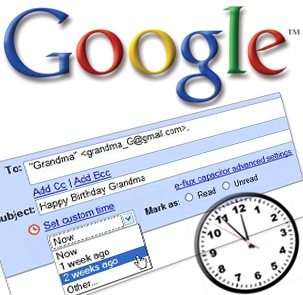
Google Custom Time In keeping with previous 'releases' by Google on 1st April each year, the internet monolith have this time rolled out a new feature to Gmail: Custom Time. This handy function allows users to send email so that it appears to have been sent hours, days, months or even years earlier than when the user actually clicked 'send'.

Here's how Google explain how to use it: "Just click "Set custom time" from the Compose view. Any email you send to the past appears in the proper chronological order in your recipient's inbox. You can opt for it to show up read or unread by selecting the appropriate option."

According to Google, there is an upper limit of pre-dating your mail back to 1st April 2004 - the date Gmail was released.

It certainly looks like a neat feature with a multitude of uses, as borne out by the 'testimonials':

"I just got two tickets to Radiohead by being the 'first' to respond to a co-worker's 'first-come, first-serve' email. Someone else had already won them, but I told everyone to check their inboxes again. Everyone sort of knows I used Custom Time on this one, but I'm denying it."
Robby S., Paralegal
 
"I used to be an honest person; but now I don't have to be. It's just so much easier this way. I've gained a lot of productivity by not having to think about doing the 'right' thing."
Todd J., Investment Banker

"This feature allows people to manipulate and mislead people with falsified time data. Time is a sacred truth that should never be tampered with."
Michael L., Epistemology Professor

And perhaps best of all: "The entire concept of 'late' no longer exists for me. That's pretty cool. Thanks Gmail!"
Miriam S., Delivery girl

Pretty neat, eh?

You only get 10 emails per year which can be 'pre dated', though. Google's explanation:

Our researchers have concluded that allowing each person more than ten pre-dated emails per year would cause people to lose faith in the accuracy of time, thus rendering the feature useless.


And the technology behind this wonderful new function in Gmail?

Gmail utilizes an e-flux capacitor to resolve issues of causality.

Love it. Almost as good as their
'TiSP flush drive' last year. If the idea of wired broadband where you flush cables down your toilet to establish a connection wasn't wacky enough, an email-time-machine more or less nails it.

Google April Fools’ a flop? Ingenuity has left the building

 cadie let down

I can’t be the only one thinking this.  Recent years have been so good on the Google April Fools’ front but this year’s offering falls disappointingly flat, courtesy of CADIE.  In 2007 we had the brilliant Google Flushdrive (which essentially involved flushing cables down a toilet for connectivity) and in 2008 we were treated to the ingenious Google Custom Time which ‘allowed’ you to back-date emails – primarily for mischief making.  Both ideas were great April Fools’ trickery.

This year, however, Google have unveiled CADIE Cognitive Autoheuristic Distributed-Intelligence Entity for April 1st.  And it just seems like a massive damp squib to me.  It’s something about, um, oh go and read it for yourself.Poke the Panda

There’s a quirky blog deliberately designed to look amateurishly bad which features Cadie the panda – go figure.  It’s ‘something’ I guess…. if you like that kind of thing.  As if that were not enough, though, there’s a YouTube channel and some explanatory text.  Hmm.

And that’s it?  Yeah, that’s really ‘it’.

Seriously, Google: you’ve let us down for April Fools’ this year.  

Cadie Blog

NYTimes editorial on Google and privacy

Google has been the target of a number of privacy critics, most likely because of the huge amount of information it is privy to and the lack of transparency about how much of it is kept in a personally identifiable state and for how long. An editorial in today's New York Times calls for a "privacy upgrade" at Google.

Here's a snippet:

What Google Should Roll Out Next: A Privacy Upgrade - New York Times:

The biggest area where Google's principles are likely to conflict is privacy. Google has been aggressive about collecting information about its users' activities online. It stores their search data, possibly forever, and puts "cookies" on their computers that make it possible to track those searches in a personally identifiable way - cookies that do not expire until 2038. Its e-mail system, Gmail, scans the content of e-mail messages so relevant ads can be posted. Google's written privacy policy reserves the right to pool what it learns about users from their searches with what it learns from their e-mail messages, though Google says it won't do so. It also warns that users' personal information may be processed on computers located in other countries.

The government can gain access to Google's data storehouse simply by presenting a valid warrant or subpoena. Under the Patriot Act, Google may not be able to tell users when it hands over their searches or e-mail messages. If the federal government announced plans to directly collect the sort of data Google does, there would be an uproar - in fact there was in 2003, when the Pentagon announced its Total Information Awareness program, which was quickly shut down.

In the early days of the Internet, privacy advocates argued that data should be collected on individuals only if they affirmatively agreed. But businesses like Google have largely succeeded in reversing the presumption. There is a privacy policy on the site, but many people don't read privacy policies. It is hard to believe most Google users know they have a cookie that expires in 2038, or have thought much about the government's ability to read their search history and stored e-mail messages without them knowing it.

Google says it needs the data it keeps to improve its technology, but it is doubtful it needs so much personally identifiable information. Of course, this sort of data is enormously valuable for marketing. The whole idea of "Don't be evil," though, is resisting lucrative business opportunities when they are wrong. Google should develop an overarching privacy theory that is as bold as its mission to make the world's information accessible - one that can become a model for the online world. Google is not necessarily worse than other Internet companies when it comes to privacy. But it should be doing better.


Google Moon

Google Moon From Scenta 3.3.08:

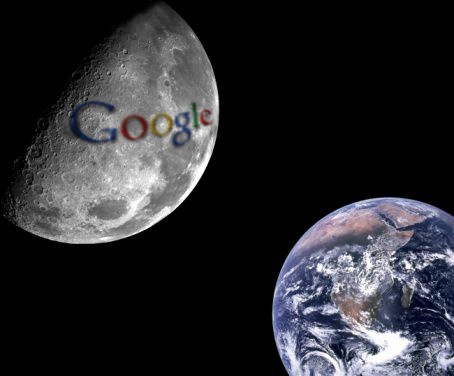
In what's being described as the most wide-scale advertising attempt ever known, Google is planing to "brand" its logo into the surface of the moon so that it is visible from Earth, although presumably via telescope rather than to the naked eye.


The web giant is said to have paid the US government an estimated $1 billion for the rights to the lunar land.

I came across this story last week and initially suspected it might be another Google April Fools. Apparently not, though. I guess this scheme is somewhat in keeping with Google’s light-hearted and rather maverick corporate image. But the moon, seriously? Isn’t it a touch excessive and unnecessary? Google has become synonymous with the internet; there can hardly be a single person left in the civilised world who isn't aware of Google. However, with such a large market share in internet search and advertising, maybe Google are looking for a new customer base - extra-terrestrial web users. Yeah, that must be it.

Media coverage of UC-Chico hacker incident.

A few days ago, I blogged about a hacking incident at the University of California, Chico (see PIPEDA and Canadian Privacy Law: Incident: Hacker Accesses Thousands of Personal Data Files at CSU Chico). In the meantime, the mainstream media have really picked up on the story, as evidenced by Google News. This is just one in a series of university hacking incidents, but in this post-ChoicePoint age, the media is taking notice in a serious way. Just google it here.

GoogleMaps Streetview Silliness: A Double Bill

GoogleMaps From The Independent 21/03/09:

The Internet giant Google has been forced to remove dozens of images from Street View, its controversial mapping service, after complaints from users who felt it breached their privacy.

After launching in Britain on Thursday the service, which gives 360-degree three-dimensional views of 25 of Britain's biggest cities, immediately drew criticism from people objecting to invasions of privacy and offensive imagery.

Among the images pulled within the first 24 hours – even though faces were blurred – are a man vomiting on the pavement in Shoreditch High Street, east London, another man in shorts and T-shirt entering a sex shop in Soho, and a man being arrested behind a security cordon in Camden, north London.

"When we launched the service, we explained how importantly we take the service and explained how easy it is to remove pictures. We have received a few removals in the past 24 hours but less than expected," he said. "The tools are there for users to remove pictures they are not happy with. We are pleased the tools we developed are working well."

Okay.  I don’t ‘get’ the problem here. Google seem to have taken a wholly proportionate and responsible approach, balancing the need for the usefulness of the service to continue while respecting people’s ‘right’ to privacy – such as it is.  On the face of it, there doesn’t seem to be much difference between being snapped by the ‘Google car’ and inadvertently being caught in the frame of someone’s holiday shot on a street somewhere.  Let’s remember, the chances of you being caught on camera by the ‘Google Car’ are relatively miniscule and even then, the likelihood that you’re recognisable is even less.  In the unlikely event that you are – and you have a problem with it – Google offer a means of resolving the problem by obscuring your identity.  So, seriously: what more can they do? 

For my money, I think there’s a certain amount of truth behind the notion that a person will only be bothered about this kind of thing if they were somewhere (or doing something) they shouldn’t have been. 

From Outlaw.com 19/03/09:

A privacy campaigner will launch a legal challenge to Google's Street View service, which was launched today. Simon Davies of Privacy International says that he will pursue "a test case" against Google.

"There still hasn't been a formal complaint put to the Information Commissioner, but we will [file one] now on the basis of prior consent being needed for this service," said Davies. "I think there is something of a test case in this. We are arguing that a line has to be drawn to empower the individual to make a conscious decision whether to allow his or her images on to such a system."

The UK's privacy watchdog the Information Commissioner's Office (ICO) endorsed the service last summer.

"We are satisfied that Google is putting in place adequate safeguards to avoid any risk to the privacy or safety of individuals, including the blurring of vehicle registration marks and the faces of anyone included in Street View images," said an ICO statement.

Err, yes, Simon Davies.  Good luck with that.

Keyword Quirks

Keywords Search Terms I’m always keeping a close eye on the ‘stats’ for Law Actually and I’m often reminded of the wacky things that people punch into Google.  Those who ask search engines ‘questions’ usually rank as the funniest search terms of all.  Sometimes, far better than hitting the search button, users would benefit from taking a step back and really THINKING about what it is they’re searching for.  The last couple of days have been particularly fruitful on the wacky keyword front so thought I’d share a few with you, faithful readers:


- “are all cameras actually speed cameras” ….Probably not!  For instance, I’ve got an old Polaroid somewhere that I’m pretty sure isn’t one.

- “blog my struggle to get a training contract” Oh come on!  Chin up and all that.

- “is l.p.c a qualification in its own right” Just stop it! I don’t want this can of worms opened again. 

- “company law topics for dessertation”  Oh boy.  Your ‘dessertation’, eh?  Hmm… good luck with that one.

- “is the iphone good for law students” I don’t know.  Is it?  Either way, surely you’ve got something better to spend you money on.

And my absolute favourite:

- “what did charlotte dymond say as she died” I don’t know…  Ouch?

**—UPDATE—**
After ‘going to press’ I came across another couple of keyword brarmers.  I’m still trying to figure out why there are so many rich pickings at the moment.

- “sex in looe” I’m no huge fan of Looe, granted, but this search just seems to defile an innocent Cornish town.  Shame on you, you ‘smutty Googler’.  Or maybe they meant 'sex in lieu’.  The question then, of course, becomes, ‘in lieu of what?’ 

- “dissitation and breach of confidence and human rights article 8 and 10” OK, at the risk of stating the obvious, the fact you’re struggling with spelling ‘dissertation’ doesn’t bode too well for the prospects of you turning in a killer paper!  Far be it for me to ‘diss’ you though.  Or is that ‘dissit’?

- “the law on cameras in the toilet” Oh honestly!