Human Rights

Showing posts with label Human Rights. Show all posts

Too fat for execution?

Lethal Injection From USA Today 05/08/08:

COLUMBUS, Ohio (AP) — An inmate scheduled for execution in October says he's so fat that Ohio executioners would have trouble finding his veins and he might not be properly anesthetized.

Lawyers for Richard Cooey argue in a federal lawsuit that Cooey had poor veins when he faced execution five years ago and that the problem has been worsened by weight gain.

They cite a document filed by a prison nurse in 2003 that said Cooey had sparse veins and that executioners would need extra time.

"When you start the IV's come 15 minutes early," wrote the nurse who examined Cooey. "I don't have any veins."

The lawsuit, filed Friday in federal court in Columbus, also says prison officials have had difficulty drawing blood from Cooey for medical procedures. Cooey is 5 feet 7 inches tall and weighs 267 pounds, according to the lawsuit.

Cooey, 41, was sentenced to die for raping and murdering two University of Akron students in 1986. A federal judge granted him a last-minute reprieve in 2003. In April, he lost a challenge to Ohio's lethal injection process when the U.S. Supreme Court said he had missed a deadline to file a lawsuit.

Cooey's execution is scheduled for Oct. 14.

I think it's safe to assume that few members of the public are going to have much sympathy with Cooey.  For what it's worth, I'm not a pro capital punishment kind of guy, although I have to admit I don't completely disagree with it in all circumstances either.   There might be an element of validity in Cooey's argument or it might just be an increasingly used and perhaps topically appropriate attempt to wriggle out of the death penalty.  Cooey's argument, of course, centres around the fact that should the first stage of the injection process fail, that is, the anaesthetic,  his death will be excruciatingly painful and contrary to basic human rights.  Personally, I think a painful death is far less agonising than waiting on death row for however long, just waiting to die. 

McKinnon loses appeal

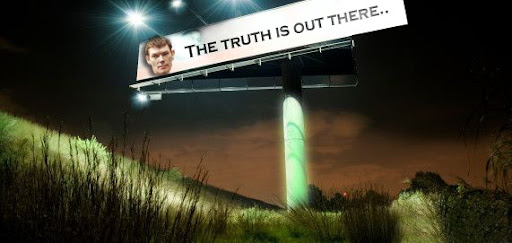
Gary McKinnon - truth From Outlaw.com 30.07.08:

NASA hacker Gary McKinnon has lost his appeal against extradition to the US. Five Law Lords have unanimously rejected his argument that plea bargaining by US prosecutors undermined his human rights

US prosecutors are seeking his extradition. McKinnon has opposed the move and appealed it through the courts, eventually reaching the UK's highest court, the House of Lords.

McKinnon claimed that he was told that he would serve a three to four year sentence with less than a year in a low security US jail before being allowed to serve the remainder in the UK if he pleaded guilty and did not oppose extradition.

If he opposed extradition and did not plead guilty he would receive a sentence of eight to ten years at a high security US jail with no repatriation, he was told.

McKinnon's legal team argued that the size of the disparity between these two sentences put McKinnon under such pressure to plead guilty that it interfered with his human rights, and put him under impermissible pressure to surrender his legal rights, particularly his right to contest extradition.

The Law Lords rejected that argument. "In one sense all discounts for pleas of guilty could be said to subject the defendant to pressure, and the greater the discount the greater the pressure," said Lord Brown of Eaton-under-Heywood in the ruling. "But the discount would have to be very substantially more generous than anything promised here before it constituted unlawful pressure such as to vitiate the process.

Okay, I except that part at least: for the plea bargain to be justifiably considered unfair - to the point of infringing McKinnon's human rights - the disparity between sentences would need to be a good deal greater.  Otherwise, McKinnon's argument against his extradition appears fanciful to say the least.  But does he really deserve to be extradited?

Well, according to the PC Pro blog:

Let’s get this straight, Gazza did it. There’s no second gunman lurking, he wasn’t framed by the mob, nobody forced, threatened or otherwise made him hack into US military computers. He was bored and decided to peek up America’s skirt. 97 times.

Happily though, Gazza, the cheeky little scamp he is, decided that merely hacking into their machines wasn’t enough and also left mocking little messages critiquing US foreign policy, which is a bit like kicking a big, angry bear in the bottom and then sticking your head in its mouth when it doesn’t immediately bite your foot off.

And if you were left in any doubt as to their feelings on McKinnon:

.....Gary McKinnon is going to be extradited and deserves it.

This battle shouldn’t be fought over McKinnon, he doesn’t deserve the attention, but my sense is that sooner or later somebody will come along who does, and then hopefully, all these headlines will be justified.”

Wow.

Children to be fingerprinted as part of library loan process

From The Telegraph 28/05/10:

Students in Manchester are having their thumbprints digitally transformed into electronic codes, which can then be recognised by a computer program.

Under the scheme, pupils swipe a bar code inside the book they want borrow then press their thumb on to a scanner to authorise the loan. Books are returned in the same way.

But critics said they were “appalled” at the system, developed by Microsoft which is also being trialled in other parts of the country.

“This is quite clearly appalling,” said Phil Booth, national coordinator of NO2ID, a privacy campaign group.

“For such a trivial issue as taking out of library books the taking of fingerprints is way over the top and wrong.

He added: “The money for such a system could be spent on actual school resources. How about some more books for the library instead?

Things aren’t that simple, of course. If resources are being directed at monitoring loaned books . Potentially, this system could allow for the school library loan processes to be automated to a far greater extent than they are currently.

Overall, I’d say this one isn’t quite as ludicrous as it initially appears. The idea of substituting a library card for a finger print is convenient – particularly for kids. 

"We have researched this scheme thoroughly. It is a biometric recognition system and no image of a fingerprint is ever stored. It is a voluntary system,” she said.

"The thumbprint creates a mathematical template. All parents have been written to and we have told them what the system is all about. From the responses we have had there has been overwhelming support."

If I were a parent, I don’t think I’d have an issue with this.  Moreover, children in schools all around the country are already fingerprinted as part of the payment system for school dinners.  I think NO2ID should focus on frying bigger fish quite frankly.

Mosley’s sexual antics, no reason to remove him

Sexual Privacy Being an avid F1 fan, I’ve been following closely the most recent scandal to afflict Formula One. Way back in March, the News of the World released an expose of FIA president Max Mosley’s sexual shenanigans with 4 prostitutes in which he was filmed participating in an array of sadomasochistic capers. Alleged by the News of the World, although fervently denied by Mosley, was that role-playing scenes based on a Nazi concentration camp setting were acted out in the course of the activities.

Given the highly sensitive and contentious nature of Mosley’s alleged activities, many in the F1 paddock have been keen to distance themselves as far as possible from the beleaguered FIA president. Many consider Mosley’s continuance in the role as untenable. In April, even F1 supremo Bernie Ecclestone turned against his tacitly acknowledged right-hand-man.

With Mosley up to face a vote of confidence in an extraordinary general meeting he called of the FIA, scheduled for 3rd June, time may well be running out.

Personally, I have always believed Mosley to do a good job in what is an incredibly difficult role. He works hard as FIA president, has helped the sport weather many crises and is sufficiently forward-thinking to help lead the sport in the future. Whatever Mosley chooses to do in his private time, it does nothing to detract from the great job he does as president.

As David Pannick points out in his article for the Times Law supplement this week:

while there are many reasons for removing Mr Mosley from office, his sordid private life, as exposed in the News of the World, is not one of them.”

Mosley currently has a high court action pending in which he is suing the News of the World for breach of privacy.  Pannick again:

 There is no conceivable public interest, however interested the public may be, in a newspaper exposing that Mr Mosley,...
The newspaper seeks to justify the intrusion by arguing that Mr Mosley is a public figure and the public are entitled to know what sort of man he is.

But as Lord Phillips of Worth Matravers, as Master of the Rolls, stated in the Naomi Campbell case in 2002: “The fact that an individual has achieved prominence on the public stage does not mean that his private life can be laid bare by the media.” Even if Mr Mosley’s sex life involves fantasising about concentration camps (which he denies), that does not make it anything more than part of his fantasy sex life. To recognise a defence for the newspaper in such a case would be generally to deny public figures a right to privacy for their sexual identity.”

On the face of it, you can’t argue with the logic of that. I’m no expert in privacy law but I’d say that Mosley is certainly in with a shout as far as the high court action is concerned. As for the future of his role as FIA president, the outlook is perhaps more bleak. The meeting on June 3rd is going to be nip and tuck to say the least. I’ve no doubt of Moseley’s continued aptitude to do his job, but in a sport in which politics and scheming machiavellian chancers are rife, I’m not sure if this is one battle Mosley has already lost.

Extreme Pornography and Sex with a Squid

squid sex offence From This is Swansea

A Mumbles man has appeared in court charged with possessing an "extreme pornographic" image of someone having sex with a dead octopus or squid.

Andrew Charles Dymond, of Dunns Lane, is also alleged to have had images which showed a person performing sex acts with horses and dogs.

The 46-year-old, who faces a total of 25 porn charges, entered a unanimous no plea when he came before Swansea magistrates.

The charge involving the sea creature states the image was of someone "performing an act of intercourse with a dead animal, namely an octopus/squid, which was grossly offensive, disgusting or otherwise of an obscene character".

Dymond is also alleged to have made 14 indecent photos of children, as well as possessing an additional 57 images.

Four of the allegations state he had images showing an act which would or was likely to result in "serious injury to a person's breasts".

A further charge makes the same allegation but in relation to someone's genitals.

Leigh Davies, defending Dymond, said: "This is a case that's probably better dealt with in the Crown Court".

Magistrates declined jurisdiction.

As perversions go, Dymond doesn’t seem to be prejudicial as to which he (allegedly) favours and it certainly promises to be an interesting case.  The relatively new provisions relating to extreme pornography are still somewhat controversial - particularly amongst civil libertarians - who feel that outside of child pornography, consenting adults should be broadly free to enter into and record their sexual antics for dissemination without restriction. 

Favourite stories of the day

Here are two of my favourite news stories that have been floating about today:

From The Register 24/03/10:

"Facebook gives you the clap: Official"

The sharp rise in syphilis cases in Teesside has been partially attributed to social networking sites which incautious locals are trawling in search of casual sex.

According to the local Evening Gazette, the number of reported cases jumped to 30 last year, up from less than 10 in 200 8. Professor Peter Kelly, executive director of public health for NHS Tees, said that "reports from doctors and nurses diagnosing and treating patients suggest some sufferers are using social networking sites to find and arrange meetings with new lovers".

facebook stdNow I'm a FB user, let's hope I won't be doing my own stint in the STD clinic.


And secondly this brarmer from the Guardian:

The police have issued a warning for harassment against an airport worker after he allegedly took a photo of a female colleague as she went through a full-body scanner at Heathrow airport.

The incident, which occurred at terminal 5 on 10 March, is believed to be the first time an airport worker has been formally disciplined for misusing the scanners.

A Scotland Yard spokesman said: "Police received an allegation regarding an incident that happened at Heathrow Terminal 5 on March 10. A first-instance harassment warning has been issued to a 25-year-old male."

The BAA employee took a photo of his co-worker, Jo Margetson, when she inadvertently went through a scanner.

"I can't bear to think about the body scanner thing," she told the Sun. "I'm totally traumatised. I've spoken to the police about it. I'm in too much of a state to go to work."


But I really love the headline comparison for this story between the Guardian and the Sun:

"Airport worker given police warning for 'misusing' body scanner"

and

"I love those gigantic t**ts"

guardianheadline

sun headline

Canned Mosquitoes

mosquito From CPD Webinars 09.02.08:

A woman has been awarded compensation after she was unfairly dismissed from her job for raising health and safety concerns after fleas bit her.
Waitress Maria Moon, 46, was fired from her job at Hafan y Môr holiday centre in Pwllheli, Gwynedd in May 2008. The tribunal accepted that the reason she had been sacked was because she raised health and safety issues after suffering the flea bites in a chalet where she lived.

In May 2008 she was dismissed, allegedly because management found that the coffee shop was overstaffed.  It was decided by the tribunal that although there was overstaffing no-one else was seriously considered.  The tribunal said, it was far more likely that her dismissal was triggered by her having raised health and safety issues.

This reminded me somewhat of that infamous stunt Bill Gates pulled last week at the TED (Technology Entertainment and Design) conference in a bid to raise the profile of his charitable work in third world countries. On stage, he released into the unwitting audience a jar full of mosquitoes claiming: “I brought some mosquitoes - we’ll let them roam around the auditorium. There’s no reason only the poor should experience this…” 

Good ol’ Bill.

Suffice it to say, it didn’t do much to raise public opinion of Gates who was later labelled “a d*ck” on TWiT and probably far, far worse by everyone present in the auditorium. The mosquitoes were allegedly vetted to be free from malaria but who knows what other nasties they might have been carrying. 

A lot of commentators have pointed to the fact that Gates should have been able to find a more acceptable way to get his point across. Interestingly, the debate on TWiT highlighted the fact that it’s illegal under both state and federal law to bring mosquitoes (or other disease-carrying vectors) into the California from abroad. John C. Dvorak also claimed that he knew “2 or 3 people” who have filed complaints against Gates in respect of his on stage antics.  However, this obviously presupposes that the mosquitoes were ‘sourced’ from outside the state.

Worthy though the topic might be, his method was a touch extreme; had I been in attendance and went home with mosquito bites, I’d been pretty darn angry. An analogy was also drawn between Gates’ mosquito stunt and laying on a lavish buffet when, after your guests have gorged themselves, smugly admit you’ve laced it with salmonella as it “shouldn’t just be citizens in third world countries who have to contend with such problems”. Interesting point.

Privacy Law – In Need of a Legislative Broom?

Privacy Law From Outlaw 03/02/09:

Parliament will investigate privacy law in the UK and may give the law a 'nudge', Justice Minister Jack Straw has said. A select committee of MPs will look into how the law has developed and how it is being implemented by courts, he said.

How has the law developed? I can think of some fairly colourful responses to that. For the present, however, I think the following would all be particularly apt:

· Slowly  · Painfully  · Inconsistently  · Awkwardly

· Incoherently 

There are a bunch of other words I could include but a list has to stop somewhere. Of course, many of these descriptions are also applicable to how the law has been implemented by the courts.

“Historically, the UK has not had a law of privacy, but one has emerged in recent years that has combined confidentiality laws covering the exchange of information with human rights laws protecting the right to a private life.

Courts have ruled in several cases that the publication of information violates these laws, and
these judgments will form the basis of future rulings.

That case law was ferociously attacked last year by powerful Daily Mail editor Paul Dacre [in the aftermath of Mosley v NGN Ltd [2008] EWHC 1777] who condemned the fact that it had developed through the courts and not through Parliament.

Straw has told Parliament's Joint Committee on Human Rights, though, that a committee of MPs will look into the development of the law.”

Recent developments in privacy rights in the context of ‘celebrity newsgathering’ have illustrated that the law has now swung to opposite end of the spectrum whereby the courts have been inclined to attach more weight to the individual’s right to privacy than to the right to freedom of expression for the press. This change has happened relatively quickly: in 2002 both the Flitcroft and Theakston cases saw a ‘naming and shaming approach’ for celebrities caught in compromising situations robustly endorsed by the courts. Since Campbell and now Mosley, however, the approach has clearly changed.

The current test which evolved out the wealth of jurisprudence in this area essentially involves examining whether the individual had a reasonable expectation of privacy in all the material circumstances. If that is the case, there is then a need to move on to balance the right of privacy under Article 8 of the ECHR with the right to freedom of expression pursuant to Article 10. An inherent part of this balancing act is determining whether there is countervailing public interest that can justify the intrusion.

Mr Justice Eady has come in for a lot of ‘stick’ in recent times – not least in the aftermath of the Mosley decision. Eady J has had heard the majority of high-profile cases in this area and because of this, it’s no surprise that he was very much at target in Dacre’s scathing attack last year.

The Times notes how far-reaching Mr Justice Eady’s contributions to this area of law are perceived to be:

“Mr Dacre told the audience at the Society of Editors’ annual conference in Bristol that the judge’s “amoral” judgments, in this and other defamation and libel cases, were “inexorably and insidiously” imposing a privacy law on the press.”

Moreover, “[Dacre accused Eady J] of bringing in a privacy law by the back door: the judge, he said, had used the Human Rights Act against the age-old freedom of newspapers to expose moral shortcomings of people in high places.”

So what’s the Justice Minister’s take on privacy?

Again from the Times:

Lord Lester of Herne Hill, one of the Joint Committee members, asked Mr Straw where he stood on privacy: the Mail interview, Lord Lester said, gave the impression that Mr Straw would like to weaken the Human Rights Act, “so as to make it easier for the press to make unwarranted attacks on personal privacy”.

Straw did not say where he stood — other than backing the forthcoming privacy review. But he did indicate support for the Act’s critics. “Those of us keen to ensure that the legacy of the Human Rights Act continues and thrives need to be alive to that criticism — and respond to it,” he said.

The realisation of privacy rights under English law is essentially achieved via a blatant shoehorning of privacy rights into the law of breach of confidence. Have Parliament finally recognised the need for a legislative broom to sweep clean the detritus of confusion which plagues the law relating to privacy?

Without doubt, it’s high time for a review at the very least and considering afresh whether legislating is the way to go. Whether this leads to a ‘Privacy Act’, though, is another matter entirely. Ironically, this area of law has weathered greater uncertainty than it’s currently plagued with and it could be argued the courts are actually demonstrating a greater degree of creativity and recognition of wider societal issues when adjudicating than ever before. For instance, the case of David Murray v Big Pictures Limited [2008] EWCA Civ 446. involving photos taken of J.K. Rowling’s son as well as the application of the Harassment Act 1997 in respect of compromising photos published on an aggrieved former-lover’s Facebook profile illustrate that the jurisprudence is developing in a way that is factoring-in modern technologies and the privacy implications that the internet and social networking brings with it.  The equivalent could certainly not have been said in the early days of wiretapping by police nor in how the courts dealt with early forms of harassment via telephone.

Now, though, privacy issues seem to rank much higher on the list of priorities.  Currently, privacy concerns have been elevated to an all time high by virtue of the rise of the internet as a publishing medium, the Web 2.0 phenomenon and society’s voracious appetite for celebrity gossip which has fuelled the ever-more aggressive and intrusive behaviour of the press.  Also, in direct response to the Mosley case, perhaps it’s been recognised that the jurisprudence has developed in a direction which is now no longer deemed suitable and legislation is required to ‘nudge’ it back on track.

The use of the ‘legislative broom’ may help in certain areas to sweep clean and clear up the awkward uncertainty such as the apparent conflating of the right pursuant to Article 10 of freedom of expression with the ‘public interest defence’ in some judgements.  Whether privacy law which is more favourable to the press is the right approach to be taking going forwards, however, seems less clear.

In any event, the Times concludes: If legislation is mooted, then it will be an irony to think that Mr Justice Eady himself — when on the Calcutt committee that reported in 1990 on privacy — favoured a privacy law. The difference is that any new law would not be seeking to curb the press but to free it.

'Tasered' Pensioner Under Review

Police Taser From: CPD Webinars 26/01/09:

A police watchdog has been reviewing the case of an 89-year-old man, who was shot with a Taser gun by officers.

Police claim they used the 50,000-volt stun-gun as the pensioner was threatening to cut his throat with a piece of glass after he had walked out of a local residential home into the street in Llandudno, Conwy.

The attending officers fearing he might kill himself shot him with the taser as a preventative measure. Afterwards he was taken to hospital to recover from a minor glass wound.

North Wales Police received an official complaint from the pensioner’s family and have was referred it to the Independent Police Complaints Commission (IPCC).

North Wales Police said afterwards that the officers had made a judgement to protect his life and it was now up to the watchdog to decide whether to hold an investigation.
They said that the use of the Taser was the "safest and most appropriate" option.  It is understood [the OAP's family] felt that police should have given themselves more time to talk to him.

It always difficult to judge these situations if you weren't present at the material time or even privy to all of the facts.  Determining whether the deployment of a taser in any given circumstance was a reasonable and proportionate course of action for officers to take strikes me as a very inexact science.  Still, that doesn't stop everyone else casting aspersions and jumping in with their two cents' worth so what the heck. 

I should think that the level of controversy surrounding the wider roll-out of tasers across police forces in the UK have put police very much on their guard when it comes to deploying them.  If nothing else, they surely know that any situation in which a person is tasered is going to be ex post very closely scrutinised.  On the facts, though, I don't think the police should be automatically criticised, notwithstanding the fact that "tasering an 89 year old" sounds a little harsh.  I'm presuming here that the police did try to speak with the man before reaching for the taser and that they acted in a responsible and appropriate manner.  If a man who is clearly acting in an irrational, disturbed and dangerous manner - he was, after all, holding a broken piece of glass to his throat - surely disabling him is the right course of action.  Sometimes a 'wait and see' policy isn't always viable with a potential suicide victim.

Commonwealth Games 2010–The Preparations

coming along nicelyFrom the Telegraph 23/09/10:

Indian government officials claimed that Tuesday's collapse of a footbridge near the Commonwealth Games Stadium, which left 27 people injured, could have been caused by the failure of components supplied by a British company.

Oh really? And what about *that* ceiling – did the Brits supply that as well? 

­Delhi chief minister Sheila Dikshit (are you freaking kidding me?!?) attempted to play down the seriousness of the bridge collapse. "These minor glitches do happen," she said. "Something maybe dripping, some tile may collapse, it doesn't mean the entire Games are bad."


[The aptly-named] Dikshit said the authorities had decided not to rebuild the bridge and would instead create a new path for the spectators to enter the venue. She confirmed that compensation payments would be made to those hurt in the bridge collapse.

However, the minister's stance is at odds with the majority opinion in India, with some commentators calling the series of calamities a "humiliation" and one newspaper carrying the banner headline 'National shame' on its front page.

Oh it’s surely not that bad? Oh wait… yes, it is!